
South Africa Safaris: The Ultimate Guide to an Unforgettable Wildlife Adventure
South Africa is one of the best safari destinations in the world. With breathtaking landscapes, world-class wildlife reserves, and luxurious lodges, a South Africa safari offers an unforgettable adventure for travelers seeking nature, wildlife, and culture all in one destination.
From the iconic Big Five to dramatic landscapes and vibrant local cultures, South Africa provides safari experiences suitable for first-time visitors and seasoned wildlife enthusiasts alike.
Why is the best Safari Destination
There are several good reasons why South Africa is one of the best places to go on safari. It is famous for its great wildlife watching, including the Big Five (lion, leopard, elephant, rhino, and buffalo), and its well-managed conservation areas. The country’s infrastructure is great, so it’s easy to get around and find your way. South Africa also has a lot of places to stay, from cheap campgrounds to super-luxurious lodges, so there is something for everyone, no matter what their taste or budget is.
1. See the the Big Five
The Big Five in South Africa include the lion, leopard, elephant, rhino, and buffalo. You may see these creatures in a lot of national parks and private reserves all around the country.
2. Safari lodges that are world-class
Travelers may choose from a wide choice of places to stay, from high-end hotels and boutique safari camps to cheap self-drive alternatives.
3. Safaris That Are Free of Malaria
A few reserves in South Africa don’t have malaria, thus they are great for families with kids.
4. Easy to get to
South Africa is one of the easiest places to go on safari since it has well-developed roads, airports, and safari infrastructure.
When is the Best Time for a South African Safari?
Top Destinations for South Africa Safaris
South Africa is home to a multitude of national parks and private game reserves, each offering a unique safari experience.
The Jewel of South Africa
Kruger National Park is one of Africa’s biggest and most well-known wildlife reserves. It covers around 2 million hectares in the northeastern section of South Africa. If you’re going on your first safari in South Africa, you have to go here. The park is huge and has a lot of different types of ecosystems, which makes it home to a lot of different kinds of animals. Kruger is a public park where you may drive yourself around, which makes it a popular and cheap choice. The park features a lot of well-maintained roads, rest areas, and picnic areas, making it easy and enjoyable to go on safari.
There are over 150 kinds of mammals, more than 500 kinds of birds, and 330 kinds of trees in the park. Kruger’s many different ecosystems, including as grasslands, woods, and riverine forests, help to maintain this amazing biodiversity. The park is well-known for having a lot of elephants and lions, but you may also see big groups of buffalo, zebra, and wildebeest. There are a lot of waterholes and rivers in the park, which are great places to see wildlife, especially in the dry season when animals gather around these important water supplies.
The Lap of Luxury
The Sabi Sands Game Reserve is a group of private reserves next to Kruger National Park. The two regions are not walled off from each other, so animals may move freely between them. People know Sabi Sands for its high-end resorts and great leopard sightings. Guides can travel off-road on game drives in private reserves to get closer to the animals. These drives don’t have to stay on the main roads. This exclusivity costs more, but the experience is usually more intimate and less crowded.
Sabi Sands’ private reserves provide a more exclusive safari than Kruger. You are more likely to experience memorable animal encounters when there are less cars on the road and smaller groups. The guides in these reserves are usually very well-trained and experienced, and they frequently have the flexibility to spend a lot of time with the animals, which gives them more chances to observe and take pictures. Many of the lodges in Sabi Sands are among the best in the world, with great food, spa services, and rooms that are as nice as those in the best hotels.
Notable Private Reserves
Types of Safari Experiences in South Africa
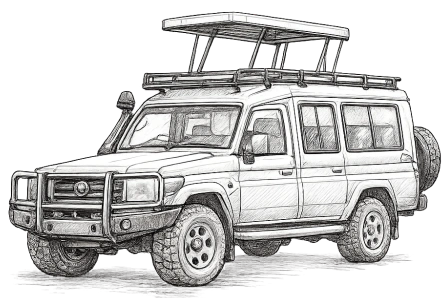
Guided Game Drive
Professional guides take visitors into the bush in open safari vehicles to track wildlife and share insights about the ecosystem.

Luxury Safaris
High-end lodges provide exclusive experiences including private game drives, gourmet dining, and spa treatments in the wilderness.
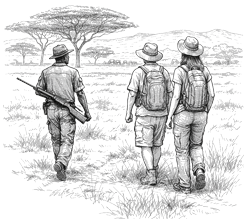
Walking Safaris
For adventurous travelers, guided walking safaris offer a thrilling opportunity to explore the African wilderness on foot.

Self-Drive Safaris
South Africa is one of the few countries where visitors can safely explore wildlife parks using their own vehicles.
Essential Tips for Planning Your South Africa Safari
- Book well in advance — the best lodges and camps fill up months ahead, especially over peak season (July–August) and the December holidays.
- Consider combining a malaria zone (Kruger/Sabi Sand) with a malaria-free reserve (Eastern Cape) if travelling with young children.
- South Africa uses 220V power with Type M three-pin plugs — bring a universal adapter.
- The South African rand offers excellent value for international travellers — luxury experiences here cost significantly less than comparable properties in East Africa.
- Fly into O.R. Tambo (Johannesburg) for northern safari regions, or Cape Town International for the Western Cape and Eastern Cape reserves.
- Allow at least three nights at any safari property — game viewing rewards patience and repeat drives reveal entirely different sides of the bush
Everything You Need to Know About South Africa Safaris
Is South Africa Safe?
Yes, South Africa is generally safe for tourism. The safari areas are well-managed and secure. Standard travel precautions should be observed, but most visitors have safe and enjoyable experiences.
Getting There
This country is well-served by international flights into Jomo Kenyatta International Airport (NBO), Nairobi. Most major airlines fly direct from London, Amsterdam, Dubai, and Doha. Internal flights from Wilson Airport (WIL), a 20-minute drive from JKIA, connect to most safari destinations in under an hour. Road transfers are also available for nearby parks like Nakuru and Amboseli
Entry Requirements
If you want to visit South Africa, you must produce a valid visa before you can enter into the country. A visa will be issued for a visit for tourism or business purposes and is valid for a period of 90 days.
Some countries are exempted from visa control, which means that citizens from those countries do not need a visa to visit South Africa.
Visas are not issued at South African ports of entry, and airline officials must insist on visas before allowing passengers to board. If you arrive without a visa, immigration officials are obliged to put you onto a flight back to your home country.
Depending on your intended visit, you can apply for a Visitor’s Visa or a Transit Visa.
Do you need malaria medication for a South Africa safari?
Some safari areas such as Kruger National Park are located in malaria-risk zones. Travelers are advised to consult a doctor about malaria prevention.
However, several safari destinations like Madikwe Game Reserve and the Eastern Cape reserves are malaria-free, making them ideal for families.
What should I pack for safari?
Think lightweight, breathable, and neutral-colored clothing. Include:
- Long-sleeved shirts & pants (for sun and insects)
- A warm jacket (early mornings can be chilly)
- Hat, sunglasses, sunscreen
- Binoculars and a camera
- Comfortable walking shoes
Luggage Restrictions for Domestic Flights
Most safari airlines in Tanzania operate small aircraft with limited luggage space, so passengers must follow strict baggage rules.
Typical luggage allowance:
- 15 kg (33 lbs) total luggage per person
- This includes carry-on and checked luggage combined
- Soft-sided duffel bags are required
Hard suitcases are usually not allowed because they do not fit easily in small aircraft compartments.
Recommended Luggage Type
The best luggage for safari flights is:
- Soft duffel bag
- Lightweight travel bag
- Flexible material
These bags are easier to load into bush planes and safari vehicles.
Click to see our Packing Lists
What Kind of a Vehicle is Used During the Safari?
We use 4×4 Toyota Land Cruisers prepared for tough routes. These vehicles have pop-up roof hatches for 360-degree game viewing, a cooler box to keep drinks cold, VHF radios for communication, and electrical outlets to charge electronic gadgets.
To preserve the unspoiled safari experience, Wi-Fi is not provided in the vehicles unless required, enabling complete absorption in your surroundings. Every camp and lodge has Wi-Fi. Our cars are inspected by mechanics after each safari to guarantee they are in excellent condition.
How many days do you need for a South Africa safari?
Most travelers spend 3 to 5 days on safari to fully enjoy game drives and wildlife sightings. However, a longer stay of 7 to 10 days allows visitors to explore multiple reserves and experience different safari activities.
Book Your Tour Today
What our Guests have said?
EXCELLENT Based on 320 reviews
 Posted on Tripadvisor
 凯 魏美妙的经历 Meijo Safaris 提供了一次衔接流畅、组织良好的旅行。服务非常准时,整个行程中团队都很可靠。我们始终感到安全且备受照顾。考虑到旅游质量和服务水平,这个价格绝对值。我肯定会再次选择他们。Posted on Tripadvisor
 Adriana KSerengeti, Tarangire and Ngorongoro Safari Our experience with Meijo Safaris was nothing short of extraordinary—truly one of the most memorable trips of our lives. From the moment we arrived, every detail was flawlessly handled. The team’s professionalism, warmth, and deep knowledge of Tanzania made us feel completely at ease, allowing us to fully immerse ourselves in the beauty of the experience. The itinerary was perfectly curated, balancing adventure, comfort, and unforgettable wildlife encounters in a way that felt seamless and personalized. But what truly made this journey exceptional was our guide, Herman. He is, without exaggeration, one of the best guides we could have ever hoped for. His knowledge of wildlife, ecosystems, and animal behavior is incredibly impressive, but what sets him apart is his intuition and passion. Herman seemed to anticipate where to go before anything even happened, we witnessed breathtaking moments that felt almost cinematic, from elusive predators to intimate animal interactions. Beyond his expertise, Herman is kind, patient, and genuinely invested in making sure every member of the family had an incredible experience. He connected beautifully with our kids, answered every question with enthusiasm, and made each day both educational and exciting. We always felt safe, cared for, and completely engaged. If you are considering a safari, do not hesitate, Meijo Safaris is the company you want! This was more than a trip, it was an experience we will carry with us forever.Posted on Tripadvisor
 vivi一生难忘的坦桑尼亚Safari惊喜之旅 这次坦桑尼亚之行,因为选择了 Mejio,成为了我和朋友们人生中一段充满惊喜、极其难忘的回忆。 1. 极度专业的行前沟通 出发前,我对比咨询了四五家Safari旅行社,Mejio 是互动感最令我满意的一家。销售经理 Marcelina 仿佛“24小时在线”,回复极其高效。她提供的行程方案不仅视觉上非常精美直观,细节也标注得十分详尽,这种专业度让我们在出发前就感到非常安心。 2. 贴心的地面服务 我们抵达坦桑尼亚入住酒店后,旅行社的工作人员第一时间赶到现场与我们面对面沟通,再次确认行程细节。不仅如此,他们还非常慷慨地赠送了我们一次阿鲁沙(Arusha)城市一日游,这种意外的礼遇让我们对旅程的好感度瞬间拉满。 3. “地表最强”的向导兼司机(重点推荐!) 这6天行程中,最大的惊喜莫过于我们的导游。可以毫不夸张地说,他绝对是世界上最优秀的司机和导游之一! 神级车技: 我们抵达时正值2月底3月初,今年的雨季提前到来,塞伦盖蒂的路况变得异常艰难。第四天暴雨后,路面深沟瞬间汇集成河,几十辆越野车被困在两岸。大部分司机都在原地等待水位下降,而我们的导游凭借极其丰富的经验,在仔细观察了几辆车的试探轨迹后,沉稳且安全地带我们冲过了深坑。这一举动直接为我们争取了宝贵的6个小时,让我们没有把时间浪费在等待中。 百科全书般的知识储备: 他对塞伦盖蒂各种野生动物的习性如数家珍。一路上,他不断通过电台与其他导游沟通协作,竭尽全力为我们寻找动物的踪迹。在寻找动物的“耐力赛”中,他带我们看到了几乎所有想看到的物种,体验感满分。 4. 期待再次相遇 虽然这次遗憾错过了大迁徙,但也给了我们再次造访坦桑尼亚的理由。下一次,我们的首选依然会是 Mejio!Posted on Tripadvisor
 Karla VBig Five, River Crossings, and a Life-Changing “Yes” I don’t even know where to start… This was the trip that changed my life. On this journey, I got engaged. My now fiancée secretly planned everything from Mexico together with Marcelina so that the proposal would happen at Serval Wildlife. And it was beyond perfect. We spent 7 days on safari. We saw the Big Five, and every single sighting felt unreal. All of it was possible because of Thomas, our incredible driver and now dear friend. He didn’t just drive us — he guided us, protected us, protected and truly cared for us. He made sure we saw our favorite animals, especially the lion cubs, knowing how much they meant to us. We watched elephants walking freely, giraffes crossing gracefully in front of our jeep, zebras painting the landscape, buffalo herds disappearing into the horizon, and leopards resting in trees like something out of a documentary. And at night, we heard hyenas surrounding our tent — a sound that was both wild and magical, a reminder that we were guests in nature’s home. And then… the Great Migration. We witnessed the river crossing — something so difficult to see, something people wait hours and days for. Like watching National Geographic in real life, except we were there.It was one of the most powerful and emotional things I have ever seen. Thomas told us something that will stay with me forever: “If you are patient, nature will give back to you.” And it is soooo true. The accommodations were beautiful and comfortable, the safari lunches were perfect, every detail thoughtfully prepared. But what truly made everything extraordinary was the heart behind it all. Marcelina made sure nothing was missing. She was always present, always attentive, always one step ahead — making sure this once-in-a-lifetime moment. She didn’t just plan a trip. She helped create one of the most important moments of our lives. This wasn’t just about seeing animals, It was about love — for nature, for life, and for each other. I 100% recommend Meijo to anyone who wants more than a vacation. If you want an unforgettable, worry-free, deeply magical experience — this is it. Marcelina and Thomas, thank you for making the trip of my dreams come true. Thank you for protecting us, guiding us, celebrating with us, and becoming part of our love story forever.Posted on Tripadvisor
 Lendir MAmazing Experience Thank you so much Meijo Safaris for organizing the best experience during our honeymoon for me and my husband. Everything was well planned and we saw alot of animals, Lions, Cheetah, Leopards and so many common wild animals, our jeep was stocked with cold beer and wines and also Wi-Fi was provided during the safari, the jeep was clean and AC was working. Special thanks to our guide Mr Herman for making sure we had the best and unforgetablw experience. Asante SanahPosted on Tripadvisor
 王 核别急,所有美好都将不期而遇 这是我们第一次safari,选择了正值产崽季的坦桑尼亚。我们的预算不高,所以在地接社的选择上耗费了很多时间,但meijo公司没有因为我们预算低而放弃我们,始终对我们的任何疑问都非常耐心回答,不断的修改符合我们预算及心理预期的方案,这是我们选择的首要原因。在行程中,向导伊曼纽尔也颇具专业,带我们顺利找到了五霸,极具难找的花豹也追到了两次,并且他也相当耐心,我们的英语很差,沟通比较吃力,也有一些沟通出现问题,但他没有嫌弃我们,总是重复和耐心。再说说餐饮方面,我们这个预算我以为以餐盒为主,但实际上居然有随行的厨师,几乎每天都是热食,厨师做的菜也比较符合我们的胃口,一切都超过了预期,选择了meijo 是我们的幸运,把伊曼纽尔推荐给即将要来游猎的朋友们!Posted on Tripadvisor
 SHAN W很好 很开心 第二天就看到了两次花豹 第三天看到了猎豹 ,第四天看到里犀牛,向导和厨师都非常好 。向导很专业,厨师做的饭菜也很好吃。 很好 很开心 第二天就看到了两次花豹 第三天看到了猎豹 ,第四天看到里犀牛,向导和厨师都非常好 。向导很专业,厨师做的饭菜也很好吃。Posted on Tripadvisor
 LA BLABA 在众多的Safari选择了MEIJO!之前朋友来就是选择这家,然后我也选择了这家!不管是定制行程的销售Marcelina Meijosafaris还是到向导Emmanuel每个人都很耐心! 向导很有经验第二天我们就追到了两只花豹,还看到它狩猎时刻!第三天追到了猎豹!第四天看到了犀牛!狮子几乎每天都能看到还能看成群的!Posted on Tripadvisor
 HUANG S很幸运集齐非洲五霸,向导也很给力,很努力的带我们去寻找我们想要看的动物,整个过程刺激又好玩,非常不错! 很幸运集齐非洲五霸,向导也很给力,很努力的带我们去寻找我们想要看的动物,整个过程刺激又好玩,非常不错!Posted on Tripadvisor
 Paolo DSafari indimenticabile con Meijo Safari – super consigliato! Abbiamo vissuto un’esperienza straordinaria con Meijo Safari, organizzata in ogni dettaglio. L’itinerario è stato perfetto: Tarangire, lago Ndutu, due giorni nel Serengeti e il magnifico cratere di Ngorongoro — un viaggio completo ed emozionante. La nostra guida Elia è stata eccellente: sempre puntuale, professionale e molto preparata. Ci ha spiegato animali, flora e fauna in modo chiaro e coinvolgente, rendendo ogni avvistamento ancora più interessante. Abbiamo apprezzato molto anche il suo approccio rispettoso: guida prudente, mai invasiva e sempre attenta a non disturbare gli animali, seguendo una vera filosofia di “non lasciare impronte”. Grazie a lui siamo riusciti a vedere i Big Five, un’emozione unica! In particolare, l’avvistamento del rinoceronte nero nel Serengeti è stato davvero indimenticabile. Consigliamo assolutamente Meijo Safari e Elia a chiunque voglia vivere un safari autentico, ben organizzato e rispettoso della natura.
Tripadvisor Travelers' Choice Award Winner
For the third year in a row, we are truly honored to be recognized with the prestigious TripAdvisor Travelers’ Choice Award for 2023 & 2024 and 2025.
100% Tailored Safaris
No matter if you’re an individual, couple, family, or group, Meijo Safaris is here to assist you in planning your itinerary and guaranteeing that you have an incredible experience in Africa with complete confidence and peace of mind.
Experienced Safari Experts
You will have the opportunity to plan your journey with knowledgeable Safari Specialist who will guide you every step of the way. Embrace a life where you can dedicate more time to living the experience, rather than getting caught up in researching, worrying, and comparing.
Need help planning? Our team is here for you
Share your travel ideas with us, and we’ll design a custom safari itinerary tailored just for you within 4 hours.