Serengeti Wildebeest Migration Safari
Witness the Great Wildebeest Migration in Serengeti! Experience river crossings & calving season. Best time to go, expert guides & camps
Witness the Great Wildebeest Migration in Serengeti! Experience river crossings & calving season. Best time to go, expert guides & luxury camps, Every year, 1.5 million wildebeest, 200 000 zebra, and hundreds of antelope of various types undertake the 800 to 1000 km journey across Tanzania’s Serengeti and Kenya’s Masai Mara. All of the major predators, as one would assume, follow closely behind. It’s their take on ‘Food on the Move.’
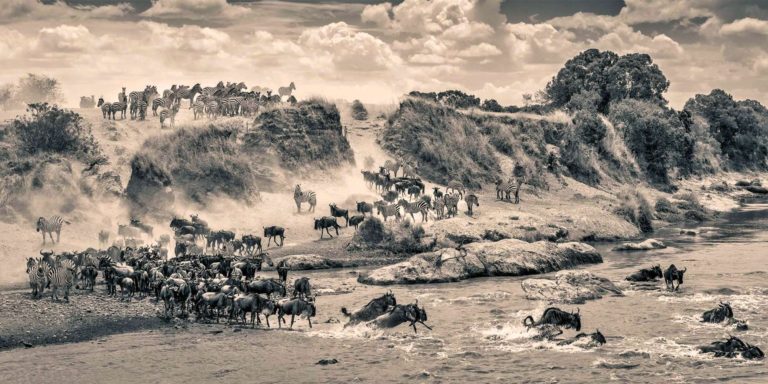
There are no words to describe the feeling of witnessing these massive herds of wild animals roar across the plains, blowing up dust as they go, as they roar across the plains. They are truly one of the greatest spectacles on earth. If you watch them moving, it appears to be almost as if thunder is rumbling underneath the African soil as they are moving. And that’s before we get to the crocodile-infested river crossings in June/Jul/August.
What is Serengeti Wildebeest Migrations
Why do they Migrate?
This endless, 800–1,000 kilometer journey is driven by one simple need: survival. The animals follow the rains, which create fresh, nutrient-rich grasslands. They move through different habitats—open plains, riverine forests, and wooded savannah—each offering food and presenting unique challenges, from predators to difficult terrain.
This non-stop, year-long cycle showcases the incredible resilience and adaptability of wildlife in the Serengeti ecosystem.
Migration Route
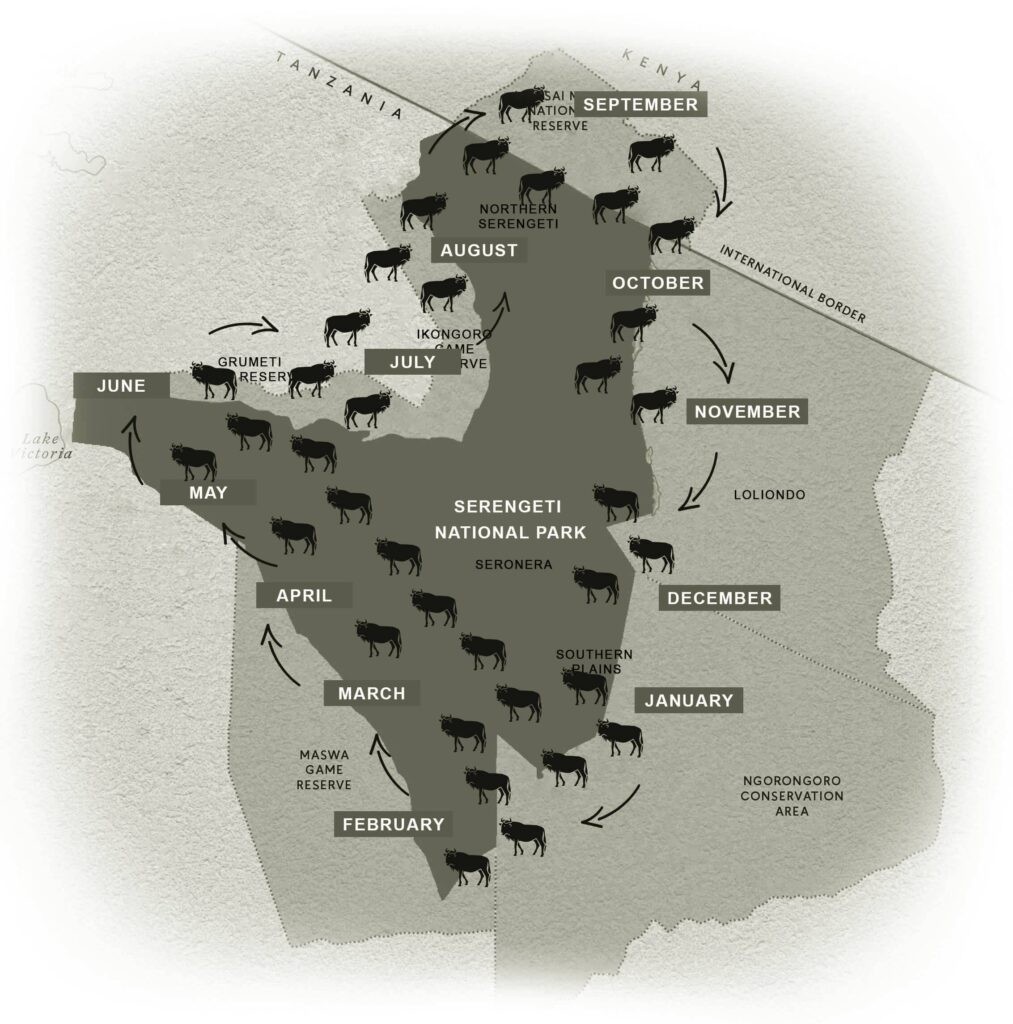
The Great Migration moves in a continuous clockwise circle over East Africa. This epic trip starts on the southern Serengeti plains in Tanzania and goes north to the Maasai Mara in Kenya in search of new pasture and water.
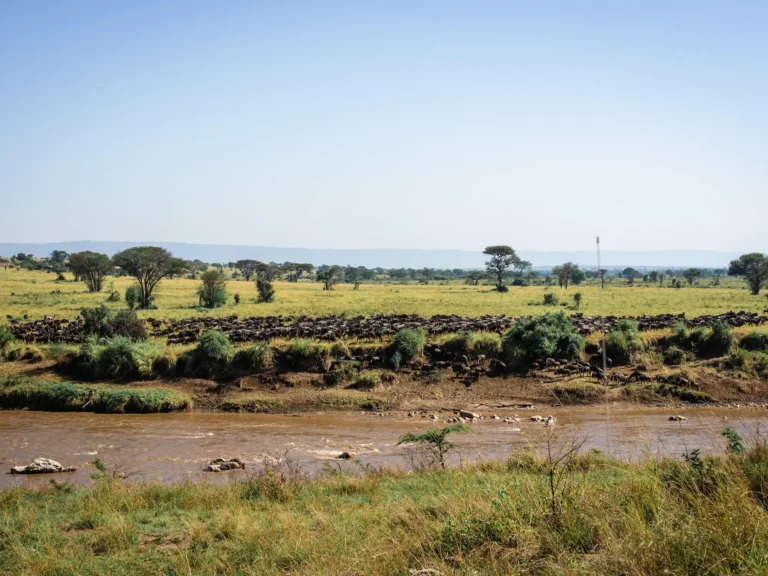
The route is known for its famous—and dangerous—river crossings. Herds have to cross the Grumeti River and, most notably, the Mara River, where crocodiles are waiting for them below the surface. These spectacular incidents are some of the most dangerous parts of the whole expedition.
The animals move across a patchwork of grasslands, forests, and wetlands, where they learn to deal with the various challenges and resources in each one. This complicated and ever-changing journey covers 800 to 1,000 kilometers and takes months to finish. The year-long, non-stop cycle is a strong proof of how strong and flexible wildlife in the Serengeti and Mara ecosystem is.
The majority of wildebeest calves are born in February, and the animals remain in the same region. There are said to be 8000 babies born per day for roughly three weeks.
The animals begin their long trip north in April or May in search of new grazing land and fresh water.
In the Western Corridor, the animals gather on the Grumeti River’s south side. Instead of being one continuous river, the river here often consists of a number of ponds and streams. These river crossings are not as as impressive as those of the Mara River in the north, but the animals serve as an annual feast for the enormous crocodiles of the Grumeti River.
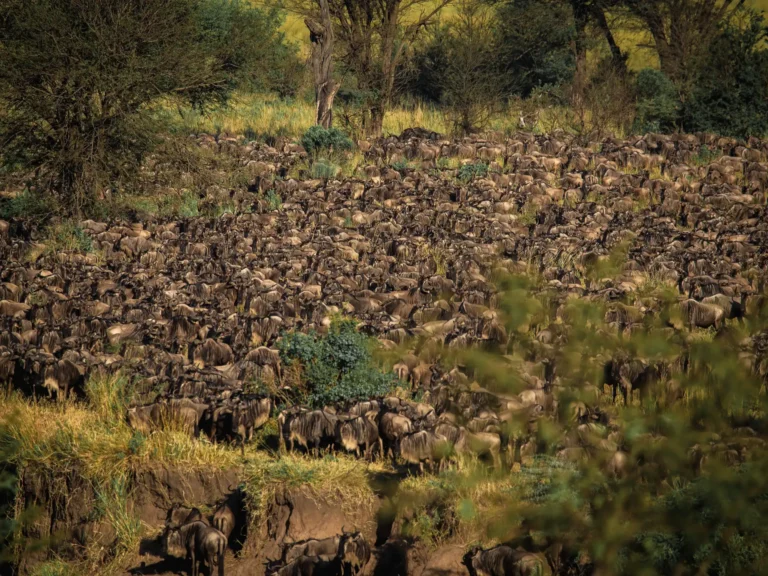
By late July and August, the leading waves of the migration arrive in Kenya’s Maasai Mara, while the majority of the herds remain on the northern Serengeti plains. Here, the journey converges on its greatest and most dramatic obstacle: the Mara River. The spectacle of the crossing is so iconic that viewing areas along the river—largely within public national parks—often become crowded as visitors jostle for a prime position.
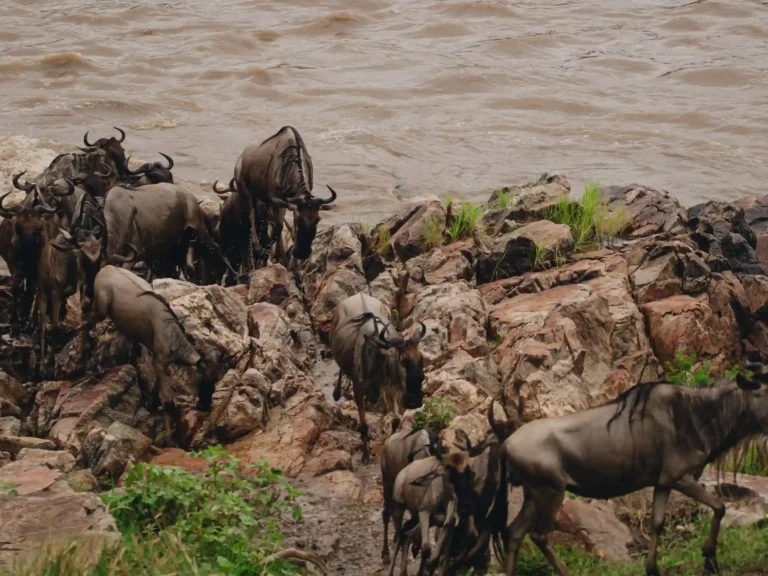
Whether in nervous clusters or chaotic hundreds, the wildebeest plunge into the crocodile-infested, swift-flowing waters. These crossings lay nature bare: crocodiles seize multiple meals in a single day, while hyenas and lions patrol the banks, ready to ambush the exhausted or unlucky. Even the river itself claims victims, its currents drowning many, only to nourish the ecosystem’s fish and birds.
By September and October, most of the herd has crossed into the Mara’s vast grasslands, though stragglers may remain in the northern Serengeti. The wildebeest graze across these rich plains, regaining their strength until the short November rains stir their ancient instinct to turn south, and the great cycle begins again.
The annual Great Migration changes direction in November. The short rains signal to over a million wildebeest and zebra that it is time to leave Kenya’s Maasai Mara and return south to Tanzania’s Serengeti National Park.
On the southward journey, the herds spread out across the eastern Serengeti. They cross the park’s central and eastern plains, which are now green and fertile after the rains.
Their destination is the southern Serengeti plains. By January, the herds arrive. Here, hundreds of thousands of wildebeest calves are born in a few weeks. This incredible event of new life marks the end of one migration cycle and the beginning of the next.
Wildebeests Migration Map
It is always recommended to book the migration Safari as early as possible because the camps and lodges are limited in number. They fill up very quickly, especially from June to October.
The Majority of the Migration happens in Serengeti National Park, Tanzania, and only a small part of the cycle occurs in Masai Mara National Reserve, Kenya.
The river crossings are highly unpredictable, but they generally occur from May to September in different parts. The more the number of days you stay, the higher the chance to witness it. Since the migration and the river crossing are big events, you can expect more crowds from June to September in Serengeti and Masai Mara.
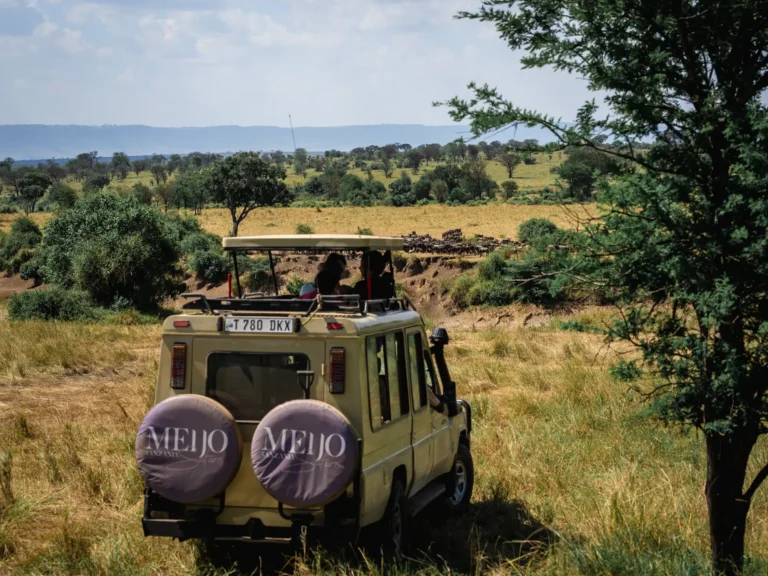
Always stay close to the river or choose the mobile migration camps for the best game viewing. Although you cannot see the migration from your campsite, you can always drive around and search for them.
Migration Disclaimer: Migration patterns are guided by nature, not fixed dates. Rainfall, grass availability, and climate variability can cause herds to split or change direction. While itineraries are planned around expected movement, sightings can’t be guaranteed. The Serengeti offers exceptional wildlife year-round, including big cat encounters and rich landscapes.
Migration Tours

5 Days Wildebeest Migration Safari with Natron
Home > Blog > Parent Category > Category > Page
8 Days Wildebeest Migration River Crossing
This 8 Days Wildebeest Migration river Crossing safari trip will let you see the raw drama of nature. Safari to see the wildebeest migration as well as the river crossing. You will follow the huge herds as they gather along the riverbanks, looking for the best place to cross.
Safari cost from $3675 per person
Tarangire National Park & Serengeti National Park & Ngorongoro Crater
7 Days Wildebeest Migration Safari River Crossing
This 7 Days Wildebeest Migration Safari River Crossing in Tanzania is carefully planned to give you the best opportunity of seeing the Great Wildebeest Migration, including the spectacular crossing of the Mara River.
Safari cost from $3100 per person
Tarangire National Park & Serengeti National Park & Ngorongoro Crater
7 Days Wildebeest River Crossing Flying
This 7 Days Wildebeests River Crossing Flying Safari tour is a Migration plan that also includes some of the best viewing of wildlife in the entire continent. When you’re not witnessing the Great Migration, you’ll be looking for the Big 5 in the Ngorongoro Crater
Safari cost from $3270 per person
Central & Northern Serengeti National Park & Ngorongoro Crater
6 Days Flying River Crossing Migration Safari
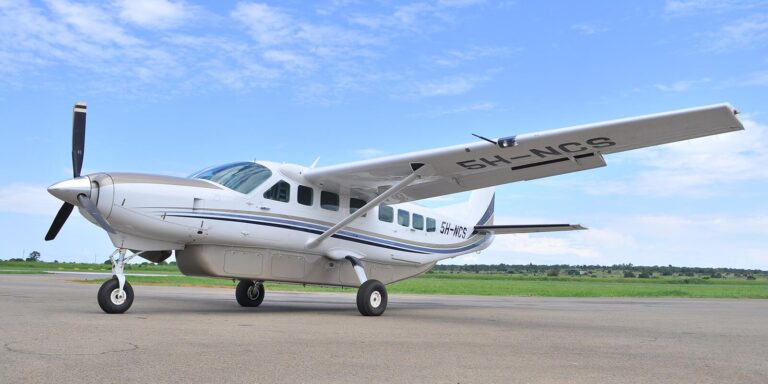
Join us on this 6 Days Flying River Crossing Migration Safari Mid-range to Northern Serengeti known as Kogatende Area, This tour can starts from Zanzibar, Dar-es-Salaam or Arusha where our guide and the jeep will be waiting for you at the Kogatende Airstrip.
Safari cost from $3050 per person
Serengeti National Park & Ngorongoro Crater
10 Days Tanzania and Zanzibar Beach Safari
10 Days Tanzania and Zanzibar Beach Safari in Tanzania designed specifically to let you explore the most famous park in the Northern Parks of Tanzania tracking the Wildebeests, Big 5 and beach relaxation at Zanzibar Island.
Safari cost from $6500 per person
Tarangire | Serengeti | Ngorongoro Crater | Zanzibar Beach
More experiences for you to try
Why you should book with us?
- Your safety is our Number 1 Priority
- There is no Hidden Costs
- Quickest response time
- Drinks - Coffee, Water, Beer, Wine & Soft Drinks
- We take pride in having knowledgeable, experienced, and genuinely caring guides
- We select Great Accommodations
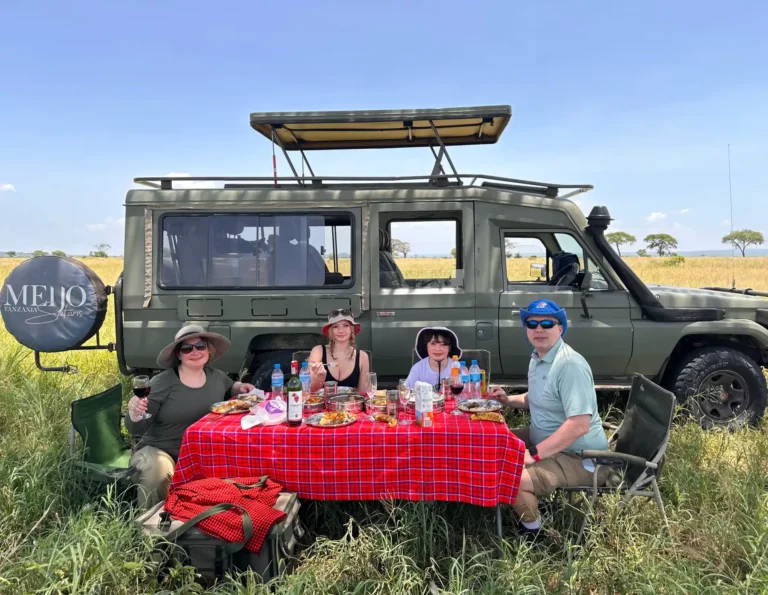
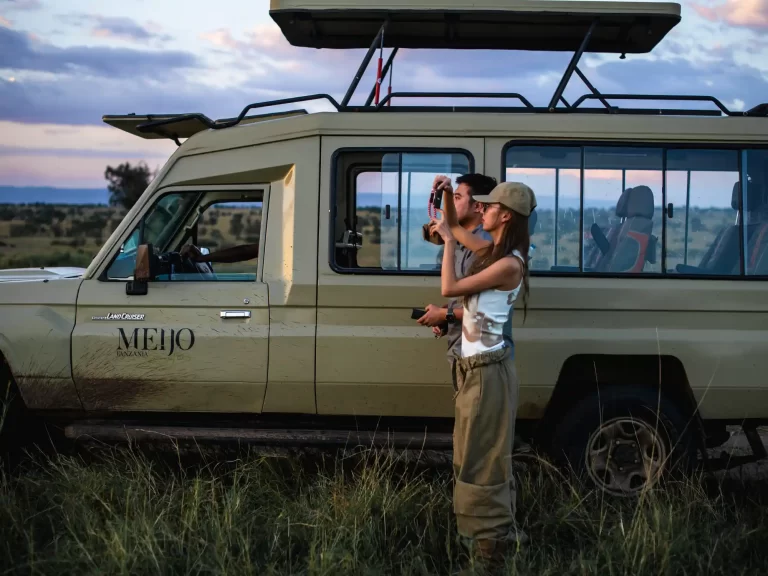
- We provide high-quality, well-maintained Land Cruisers fitted with a fridge, Wi-Fi, and power outlets
- Hot meals during most of the safaris
- Local Registered Tour Operator in Tanzania
- Competitive Prices
DAUDI MOLLEL
Safari Specialist
Experienced Safari Experts
You will have the opportunity to plan your journey with knowledgeable Safari Specialist who will guide you every step of the way. Embrace a life where you can dedicate more time to living the experience, rather than getting caught up in researching, worrying, and comparing.